

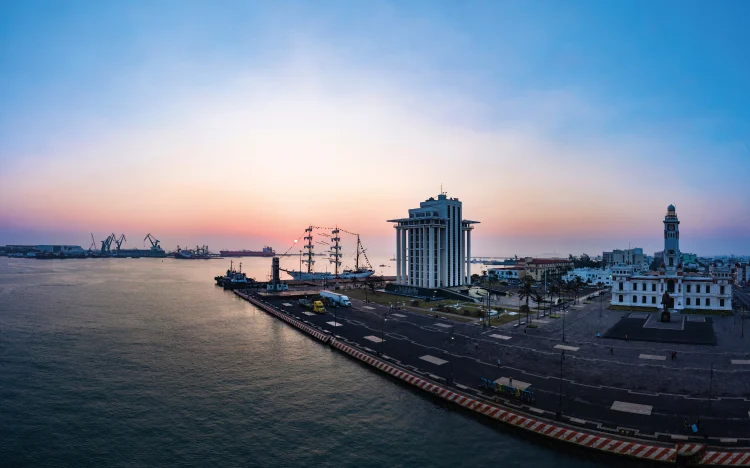
Telconet Latam, a leader in telecommunications infrastructure in Latin America, announces the construction of the CSN-2 interconnection system, which will connect Veracruz, Mexico, with Apalachee Beach in northern Florida, USA. This new system will serve as an extension of CSN-1, currently under development, consolidating an advanced connectivity network in the region.
The CSN-1 cable, whose route runs from Anconcito, Ecuador, to Bonita Springs, Florida, includes strategic landing points in Panama City and Colón (Panama) and Barranquilla (Colombia). It also has branching units designed for future expansions and new connection points, including an upcoming extension to Cancún, Mexico.
According to Francisco Villacreses, Telconet Latam's commercial vice president for Latin America, the company received a high number of requests from potential partners and customers interested in a submarine connection between Veracruz and northern Florida. In response to this growing demand, and anticipating the exponential growth of data traffic driven by artificial intelligence and the expansion of data centers in Mexico, Telconet Latam decided to develop the CSN-2 interconnection system.
CSN-2 will be deployed simultaneously with the extension of CSN-1 to Cancún, using a branching unit previously reserved for this purpose. At approximately 1,700 km, CSN-2 will strengthen transcontinental connectivity, while the Cancún connection will add another 170 km.
Installation of the CSN-1 submarine cable is progressing on schedule, and loading of the cable onto Alcatel Submarine Networks' vessel Ile de Sein is expected to be completed in the second quarter of the year. CSN-1 has also been designed with additional fiber pairs to be shared with other operators, as well as branching units that will facilitate future expansions into new markets.
Telconet Latam continues to strengthen its infrastructure with a long-term vision, anticipating the connectivity needs driven by technological growth and the artificial intelligence revolution. The company works closely with strategic partners to design new routes expanding coverage to the Caribbean, Central America and other South Pacific countries such as Chile, Bolivia and Peru, consolidating its leadership in the region's digital transformation.